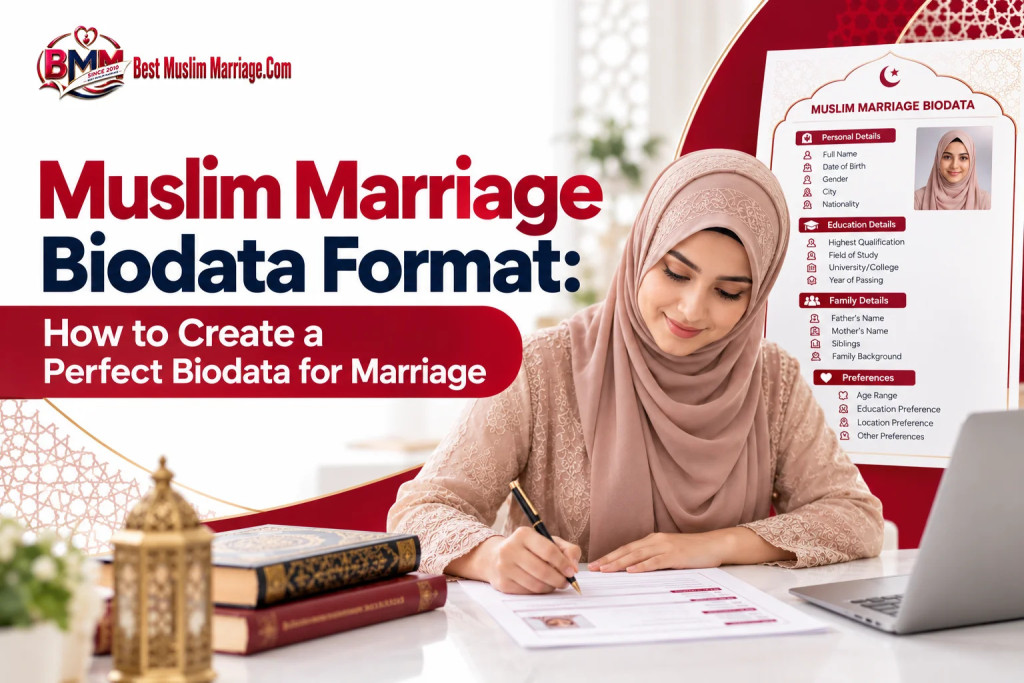
Your marriage biodata is often the first introduction a prospective partner and their family have to you. What should they learn from it? More than your age, qualification, or job title. A good Muslim marriage biodata format brings together your personal background, faith, family, and hopes for married life without making the reader work through pages of information.
Whether you are preparing a biodata for yourself, your son, or your daughter, the process is fairly simple. Start with the details that matter, explain your expectations honestly, and make the final document easy to read.
For a muslim marriage biodata, nobody needs a designer or a complicated template. A Word document or a simple PDF can do the job. What matters is how you organise the information and how accurately you present yourself.
Open with your name and, if you choose, a recent photograph. You can add Bismillah at the top if you prefer. Then divide the document into sections for personal details, religious background, education, career, family, and partner preferences.
Keep the design simple. Use one or two readable fonts, clear headings, and enough space between sections. A page crowded with decorative borders and different colours can make important details harder to find. For most people, one or two pages are enough.
Include your full name, date of birth, age, height, marital status, and current city. You may also mention your nationality or native place if it helps explain your background, particularly if you are exploring nri muslim matrimony and want prospective matches to understand your current location and family roots. Some families include complexion and blood group, but neither detail is essential. Share them only if you wish to.
Check every entry before sending the biodata. If you've moved to another city for work, for example, mention where you currently live rather than leaving readers to guess from an older address.
For many Muslim families, religious compatibility deserves careful consideration. Mention your sect or tradition if it is relevant to your preferences. You can also describe your approach to Salah, fasting during Ramadan, and other aspects of religious practice.
Be specific without turning this section into a lengthy personal statement. If regular prayers matter to you in a future marriage, say so plainly. People follow their faith in different ways. Describe your own beliefs honestly and explain what you hope to share with your future spouse.
State your highest qualification, the institution you attended, and your current profession. If you run a business, briefly explain what it does. A job title alone may not tell the reader much about your work.
You can include your employer, work location, and annual income if you are comfortable sharing those details. Income is optional, so decide whether it belongs in your profile. It also helps to mention plans that could affect married life, such as further studies, career development, or a possible relocation.
Give a short account of your immediate family. Include your parents' names and occupations, details about your siblings, and your native place where relevant.
You might also describe the values that shape your family life. Perhaps you value close family relationships, encourage everyone to pursue education, or believe both partners should have a say in important decisions. A few genuine details can give prospective families a better sense of your background than a long list of relatives.
Think about what you genuinely need in a marriage before writing this section. You may also want to understand mahr in Islam so you can discuss this important aspect of marriage with a prospective partner when the time is right. Is shared religious practice important to you? Do you want a partner who supports your career? How do you feel about living with parents or relocating after marriage?
Separate your essential preferences from things you can be flexible about. This makes your expectations easier to understand and leaves room for a meaningful conversation.
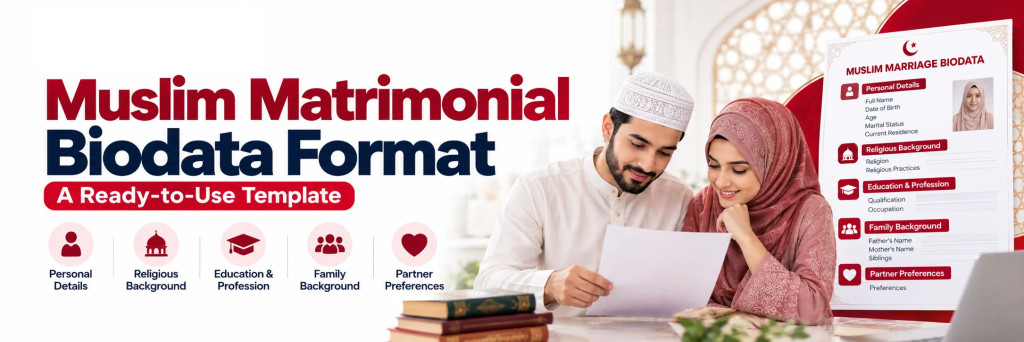
Use the following Muslim matrimonial biodata template as a starting point. Add or remove fields according to your circumstances and preferences.
BISMILLAH HIR RAHMAN NIR RAHEEM
Personal Details
⦿ Full Name: [Your Name]
⦿ Date of Birth: [DD/MM/YYYY]
⦿ Age: [Age]
⦿ Height: [Height, if preferred]
⦿ Marital Status: [Never Married/Divorced/Widowed]
⦿ Current Residence: [City, State]
Religious Background
⦿ Religion: Islam
⦿ Sect or Tradition: [If Relevant]
⦿ Religious Practices: [Brief Description]
Education and Profession
⦿ Qualification: [Degree and Institution]
⦿ Occupation: [Job Title or Business]
⦿ Work Location: [City or Workplace]
⦿ Annual Income: [Optional]
Family Background
⦿ Father's Name and Occupation: [Details]
⦿ Mother's Name and Occupation: [Details]
⦿ Siblings: [Number and Brief Details]
⦿ Native Place: [City or State]
Partner Preferences
I hope to find a compatible life partner who values [religious compatibility, mutual respect, family relationships, or other priorities]. I am looking for someone whose expectations for married life align with mine.
Contact Details
⦿ Contact Person: [Self/Parent/Guardian]
⦿ Phone or WhatsApp: [Number]
⦿ Email: [Email Address]
You can prepare separate versions for different situations. For example, someone who wants to continue working after marriage may mention that preference. Someone who prefers family-led communication can list a parent's or guardian's contact details instead.
There is no need to create an entirely different biodata format. Keep the same basic sections and state your marital status accurately.
If you have children or other family responsibilities that may affect married life, consider sharing the relevant information. You do not have to include the full history of a previous marriage in the document. More personal discussions can take place privately when both sides feel comfortable.
Honesty matters, but so does your privacy. Share what a prospective partner reasonably needs to know without putting your entire personal history on paper.
A complete Muslim marriage profile should cover five areas: personal information, religious background, education and career, family circumstances, and partner preferences.
⦿ Personal details: Name, age, marital status, height, and current city.
⦿ Religious background: Sect or tradition, religious practices, and Islamic values.
⦿ Education and career: Qualifications, occupation, and income if you wish to share it.
⦿ Family background: Parents, siblings, and relevant family values.
⦿ Partner preferences: Expectations around faith, lifestyle, education, and family responsibilities.
Include details that help someone understand your circumstances and priorities. You don't need to disclose everything at the first stage. Keep the profile relevant, accurate, and comfortable for you to share.
A biodata can contain all the right information and still reveal very little about the person behind it. A degree, job title, and family description provide useful facts, but they don't necessarily show what everyday life with you might look like.
Add a couple of lines about your interests, outlook, or routine. You might enjoy reading, cooking, travelling, volunteering, or spending weekends with family.
Choose details that genuinely describe you. There's little value in writing that you are "simple, caring, and down to earth" if you leave the reader with no idea what those words mean in your life. For instance, saying that you enjoy hosting family gatherings or hope to keep learning new skills gives your introduction a more personal touch.
Try writing about what you value rather than listing everything you dislike. Instead of saying, "No one with different opinions should contact me," explain which beliefs or expectations are essential to you. You can be firm about important matters while remaining respectful of people whose circumstances differ from yours. A useful profile encourages the right conversations. It doesn't need to appeal to everyone.
That choice is yours. If you decide to include one, choose a recent, clear photograph with good lighting. A simple background usually works better than a heavily edited image. Some people prefer to share photographs privately because of their religious beliefs or personal boundaries. You can follow that preference and still prepare a complete biodata.
A few small errors can make an otherwise good profile less useful. Check these points before sharing yours.
⦿ Incorrect or outdated information: Review your age, qualifications, occupation, marital status, and contact details. Update the document when your circumstances change.
⦿ Too much personal information: Never add passwords, bank details, identity document numbers, or information that strangers don't need. You can discuss sensitive matters privately when appropriate.
⦿ Unrealistic expectations: A long list of rigid demands can make it harder to identify genuine compatibility. Decide which qualities are essential and which preferences allow flexibility.
⦿ Poor formatting: Open the final PDF on your phone before sharing it. Check that the text remains readable and the headings appear in the right order.
⦿ Unnecessary contact exposure: You don't need to publish your full home address. Consider using an email address or a parent's contact number if that feels safer.
Both formats serve a purpose. A traditional biodata works well when relatives exchange profiles directly, while a digital profile can be easier to update and share.
A PDF or printed copy is useful for family introductions and personal meetings. It gives everyone a document they can review without navigating a website.
A profile on a muslim matrimony bangalore platform may help you share your information with prospective matches and explore suitable introductions online. Depending on the platform, you may also be able to update your details or manage who sees your profile.
Before registering, check the platform's privacy settings and understand how it displays your personal information.
If you use a printed biodata and an online profile, make sure they contain the same current information. An old job title or outdated marital status can cause avoidable confusion. Review
Your marriage biodata doesn't have to sound impressive to everyone. It needs to tell the right people who you are, what matters to you, and what kind of future you hope to build. Start with a clear format, share accurate details, and write your preferences in your own words. Before sending it, read the document as if you were meeting the person for the first time. Also, learn how to identify fake matrimonial profiles so you can recognise suspicious information and take steps to verify a prospective match. Does it answer the important questions? Does it reflect your values? If it does, you're ready to start a more meaningful conversation.
1. Should a Muslim marriage biodata include a horoscope or birth time?
ANS : A horoscope or birth time is not a standard requirement for a Muslim marriage biodata. Include personal details according to your beliefs and preferences, and discuss any specific family expectations directly.
2. Can I prepare my Muslim marriage biodata in Urdu?
ANS : Yes. You can write your biodata in Urdu, English, or another language that your intended audience understands. Choose a language that allows both families to understand the details comfortably.
3. When should I update my Muslim matrimonial biodata?
ANS: Update it when your career, location, marital status, contact details, or partner preferences change. Before sharing it again, check that every section reflects your current circumstances.
4. Should parents prepare the biodata, or should individuals write it themselves?
ANS: Either approach works. Parents or guardians may prepare the document for family-led introductions, while individuals may write their own profiles. The person seeking marriage should review the final version and agree to the information before anyone shares it.
24th October, 2026