The decision to get married brings with it feelings of excitement, pressure, family pressures, and some tough questions all at once. In most cases in the Muslim community, the wali assists in making things clear during this process.
He poses questions regarding the eligibility of a potential groom, discusses topics including the mahr and the conditions of marriage, and ensures that the rights of the bride are protected. It is important to understand that the wali cannot replace the will of the bride. The schools of thought within Islam differ concerning how much power the wali has, particularly when an adult is selecting a husband.
The wali is a guardian who assists in the marriage of the woman as per the traditions of the Islamic school that she belongs to. This role can involve evaluating the man for marriage, negotiating terms of marriage, pointing out problems, and defending the interests of the bride. The word wali relates to guardianship and responsibility, but different schools of Islamic jurisprudence give that role different levels of authority.
For instance, in the Hanafi school, a legally responsible woman can enter into a marriage for herself provided that some conditions are fulfilled. In the other Sunni schools, the wali is accorded greater prominence in the process of making marriage contracts. This point is clarified in Dar al-Ifta too when speaking about guardianship in marriage.
Within a family, the members cannot select any particular ruling from any single madhhab and declare it as the only ruling for Islam. The bride’s family and the performer of the Nikah have to consult the relevant madhhab.
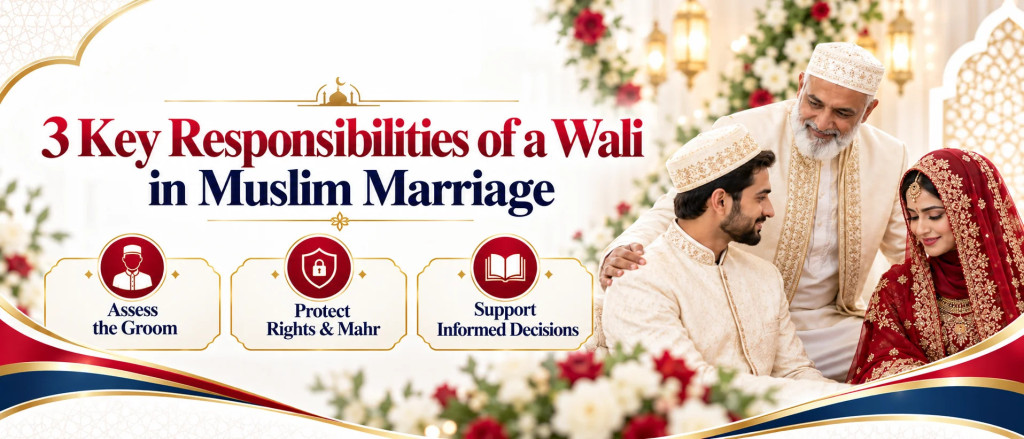
The role of a wali is to assist the woman in evaluating the marriage proposal thoroughly and ask challenging questions to make an informed decision. He should add perspective to the process rather than control it.
The wali can assist the bride to assess the moral and financial character of the groom. Early conversations often focus on shared interests, attraction, or basic compatibility. A wali can bring practical questions into the discussion.
⦿ He may ask about:
⦿ Religious commitment
⦿ Character and conduct
⦿ Financial responsibilities
⦿Family expectations
⦿ Work and future plans
⦿ Attitude towards marriage
⦿ Treatment of the bride
⦿ Expectations about children or living arrangements
These questions do not guarantee a successful marriage, but they can uncover differences that the couple should discuss before the nikah. Understanding why Nikah Important in Islam is can also help couples appreciate the religious responsibilities and mutual commitments involved in marriage. A good wali listens to the bride as well. He should understand what matters to her instead of judging a proposal only through his own preferences.
A wali can help the bride discuss mahr and marriage conditions clearly before she enters the nikah. Mahr belongs to the bride. He can help the bride understand the amount, payment terms, and any conditions the couple wants to include in their marriage agreement. Understanding Mahr in Islam can also help the bride become more aware of her financial rights and the importance of discussing mahr clearly before the nikah.
He can also encourage both sides to discuss important expectations before marriage rather than leaving difficult conversations for later. For example, the couple may need clarity about finances, work, education, residence, or other agreed conditions. The wali should protect the bride’s interests in these discussions. He should never treat her mahr or financial rights as his own.
A wali should help the bride make her decision with more information, not make the decision in her place. That distinction keeps family guidance and personal consent separate. The wali may notice concerns that the bride has overlooked. He may also ask the groom or his family questions that feel difficult to raise during early conversations.
At the same time, the bride should understand the proposal, consider the advice she receives, and make her own decision about whether she wants the marriage. A thoughtful wali creates room for honest discussion rather than using family pressure to force a particular outcome. This approach also supports building a strong muslim marriage, where mutual respect, trust, open communication, and informed decisions help establish a healthy foundation for married life.
The person who acts as a wali depends on the bride’s family circumstances and the rules of the Islamic school that governs the nikah. Family relationship matters, but it does not automatically make every male relative eligible.
Many Sunni jurists give the father the first position and then move through qualifying relatives according to the order that their school recognises. Depending on the madhhab and circumstances, that order may include the:
⦿ Father
⦿ Paternal grandfather
⦿ Brother
⦿ Other qualifying paternal relatives
When no eligible family wali exists, an Islamic authority may take the appropriate role under the relevant jurisprudential framework.
Because the exact order can differ, families should confirm it with the scholar, Qadi, or marriage authority who follows their school rather than relying on a general online list.
A wali should meet the religious requirements of the relevant madhhab and approach the marriage with sound judgment and concern for the bride. A responsible wali should:
⦿ understand his role;
⦿ act in the bride’s genuine interests;
⦿ respect her consent;
⦿ avoid personal financial benefit;
⦿ assess proposals fairly; and
⦿ avoid rejecting a match solely because of personal pride or preference.
Islamic schools may also apply specific conditions relating to faith, maturity, capacity, and family relationship. When any of those conditions create uncertainty, the family should ask a qualified authority before moving ahead with the nikah.
A Muslim woman who has no eligible family wali can seek help from an appropriate Islamic authority under the jurisprudential framework she follows. This situation often arises when a woman accepts Islam but her close male relatives remain non-Muslim, or when no qualifying relative remains available.
Dar al-Ifta explains that an authorised ruler, judge, or official may perform relevant guardianship functions when no wali exists under frameworks that require one. A woman should not simply ask any respected community member to act as wali without checking his eligibility first. A qualified scholar, Qadi, imam, or authorised marriage official can explain the correct arrangement for her circumstances.
Islamic schools differ on whether an adult woman needs her wali’s approval to conclude her marriage, so the answer depends on the jurisprudential school she follows. The Hanafi school gives a sane, adult woman the right to conclude her own marriage under recognised conditions. Abu Hanifa did not make a wali obligatory for her in the same way that several other Sunni schools do.
Other Sunni schools give the wali a more central role in forming the marriage contract. This difference often causes confusion because people mix two separate questions: “Does the bride consent to the marriage?” And “Does her school require the wali to participate or consent?”
Those questions do not mean the same thing. Whatever position a family follows on guardianship, the bride must genuinely agree to the marriage. Dar al-Ifta states that a woman must give her consent before a guardian acts for her. That makes qualified guidance especially important when families follow different schools or disagree about the wali’s authority.
No wali should force an adult woman to marry someone she does not accept. Family involvement does not give a guardian unlimited power over her choice. An arranged marriage and a forced marriage differ in one crucial way: consent.
In an arranged marriage, family members may introduce a match, ask questions, investigate the family, offer advice, and encourage the couple to think carefully. The bride and groom still decide whether they want to proceed. In a forced marriage, pressure takes away that freedom. Dar al-Ifta states that a marriage requires the woman’s consent and rejects forcing an adult woman to marry against her wishes.
A wali can advise strongly when he sees a genuine concern. He can explain why he thinks a proposal creates problems. He can ask the bride to slow down and consider information she may have missed. He should still respect the difference between guidance and coercion. That boundary protects the purpose of guardianship itself.
A wali acts through the rules of guardianship, while a wakil acts because someone gives him authority to represent them. The difference sounds small, but it affects the person’s role in the nikah. A wali holds a guardianship responsibility according to the applicable jurisprudential rules.
A wakil acts as a representative. For example, the bride may authorise someone to handle a particular part of the marriage process on her behalf. That authorisation does not automatically make the wakil her wali. The same person may sometimes perform more than one function when the relevant rules allow it, but families should still know which role he performs. Before the nikah, clarify who acts as:
⦿ Wali
⦿ Wakil
⦿ Witness
⦿ Nikah officiant or authorised marriage official
Clear roles reduce confusion during the marriage process and help everyone understand what authority each person actually holds.
A wali can bring useful guidance, perspective, and family support to a Muslim marriage, but he should never erase the bride’s own voice. His role may include evaluating a prospective groom, discussing mahr, protecting the bride’s interests, and helping the family approach the nikah carefully. Different Islamic schools give him different levels of authority, especially when an adult woman chooses her spouse.
That makes context important. Families should understand the madhhab they follow, respect the bride’s consent, and seek qualified guidance when questions arise about eligibility, guardianship order, converts, or the correct nikah process.
Q1. Can a Woman Choose Her Own Wali?
She should follow the guardianship rules of the Islamic school that applies to her situation rather than appointing someone without checking his eligibility. If she has no eligible family wali, she can approach an appropriate Islamic authority for guidance.
Q2. Can a Brother Act as a Wali?
A brother may act as a wali when the recognised order of the relevant madhhab gives him that role and he meets its conditions. Another relative, such as the father, may hold priority when he qualifies and remains available.
Q3. Can a Non-Muslim Father Act as a Wali for a Muslim Woman?
Traditional Sunni jurisprudence generally applies religious eligibility rules to the marriage wali, which can affect whether a non-Muslim father may take that role for his Muslim daughter. A convert or another woman in this situation should ask a qualified Islamic authority to explain the arrangement that applies to her.
Q4. What If a Wali Refuses a Suitable Marriage Proposal?
A woman should seek qualified religious guidance if her wali rejects a proposal and she believes he lacks a valid reason. Islamic schools address guardianship disputes differently, so the correct next step depends on the madhhab and facts of the case.
Q5. Is a Wali the Same as a Witness in Nikah?
No. A wali and a witness perform different functions. A wali carries a guardianship role under the applicable jurisprudential rules. Witnesses perform a separate role in the marriage contract and do not automatically gain the wali’s authority.
22nd October, 2026